The Delivery Audit Framework: From AI Chaos to Strategic Advantage
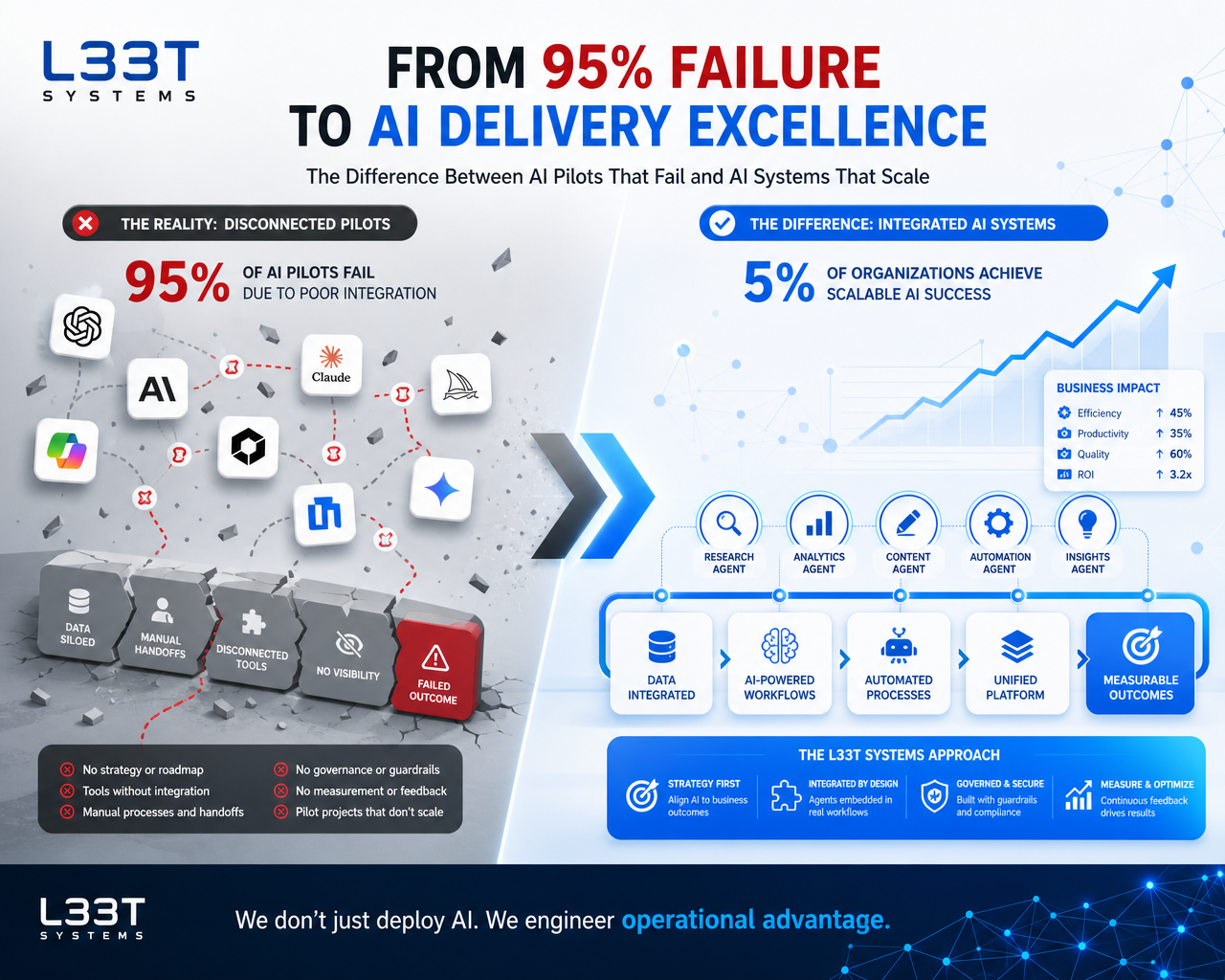
Many AI initiatives fail not because the technology doesn't work, but because organizations approach AI implementation without sufficient planning and rigor. Yet while competitors struggle with failed pilots, some professional services teams are turning these challenges into opportunities.
High-performing organizations often take a fundamentally different approach to AI integration, rebuilding workflows around AI capabilities rather than layering AI on top of existing systems. The difference? They start with systematic evaluation instead of technology selection.
The Real Problem: Most Teams Skip the Foundation
Here's what happens in most AI implementations: Teams pick a shiny tool, run a pilot, struggle with integration, and abandon the project after months of frustration. The failure is rarely the model itself, but rather issues with data readiness, workflow integration, and the absence of defined outcomes before development starts.
Some organizations do something different. They audit their delivery workflows first.
Systematic Evaluation vs. Technology Selection
Traditional approaches start with the question: "What AI tools should we buy?" The delivery audit framework flips this completely: "Where in our workflow do bottlenecks actually cost us money?"
This shift matters because organizations that succeed typically define business outcomes before implementation. Many enterprises do the reverse: they start with the technology and hope the business value will become apparent.
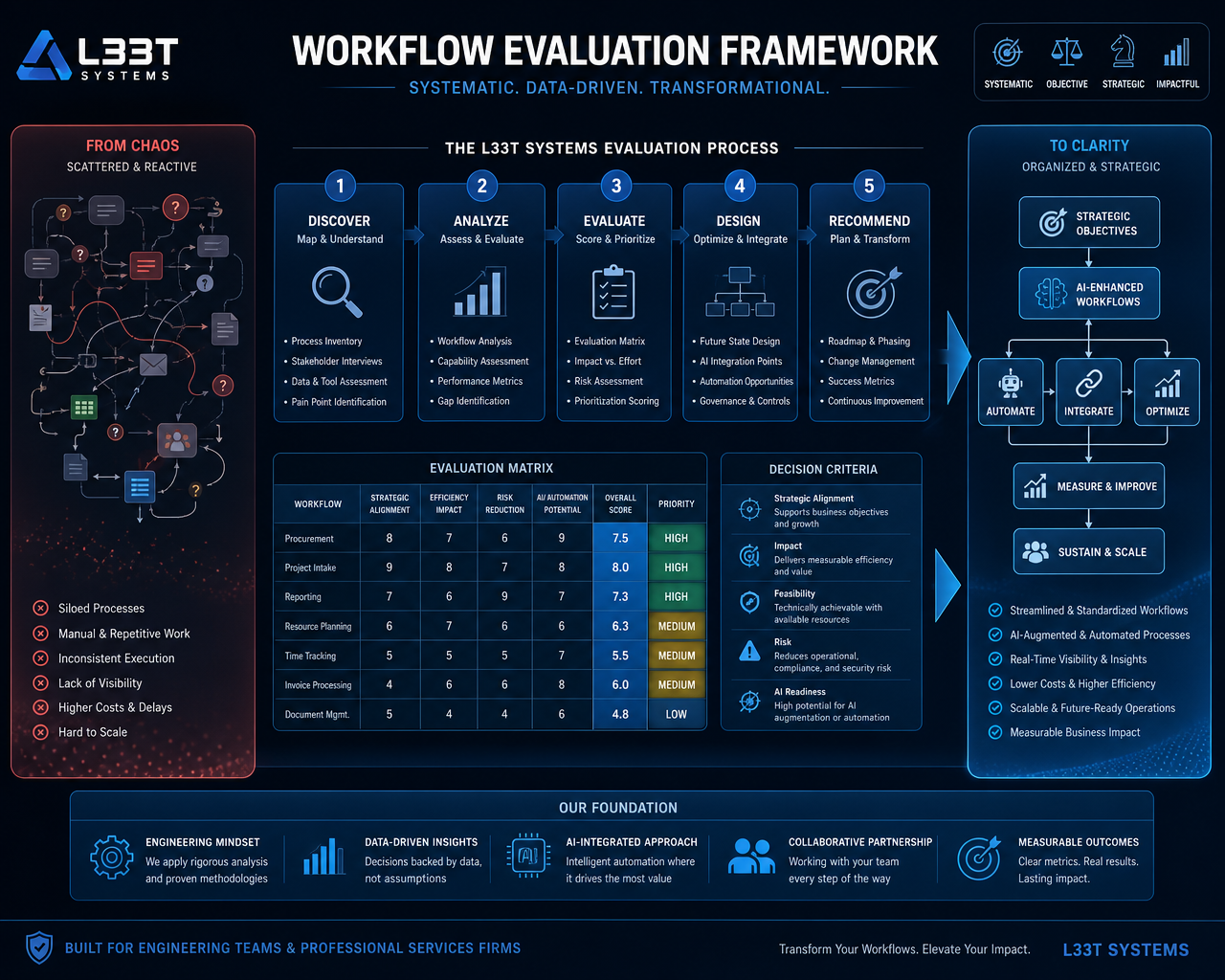
The systematic evaluation methodology includes:
1. Workflow Mapping Before Tool Selection
Begin by creating a detailed map of your current workflow. Document every task, decision point, handoff, and system involved. Don't just map the happy path. Capture what happens when projects go wrong, clients change requirements, or team members are unavailable.
For professional services teams, this typically reveals:
- Client handoff bottlenecks that delay project starts
- Requirements gathering processes that miss critical details
- Quality assurance gaps that create rework cycles
- Resource allocation decisions that optimize for availability rather than expertise
2. Risk Assessment That Actually Prevents Problems
Organizational resistance often proves to be a significant challenge in AI implementations. Many projects face resistance during scaling, with user adoption rates frequently falling short of expectations in early months. The delivery audit framework identifies these risks before implementation.
The risk mitigation framework evaluates:
- Change Management Readiness: Can the team adapt to new processes without productivity loss?
- Data Quality Foundation: Will AI recommendations be accurate enough to trust?
- Integration Complexity: How many systems need to work together for success?
- Governance Requirements: What approval processes will AI decisions require?
Moving From Guesswork to Strategic Advantage
The capability assessment framework is designed to turn AI integration from experimental technology into strategic advantage. Successful implementations tend to share consistent patterns: clear metrics, honest assessments, realistic timelines, sustained sponsorship, and deliberate organizational investment.
The Four-Phase Assessment Process
Phase 1: Current State Analysis (Week 1)
Map existing delivery workflows and identify bottlenecks that actually impact client satisfaction or project margins. Organizations with pre-defined metrics tend to achieve better success rates than those without them.
Phase 2: Capability Gap Analysis (Week 2)
AI projects lacking AI-ready data face significant abandonment risks. Evaluate data quality, team skills, and integration readiness before selecting technology.
Phase 3: Strategic Fit Evaluation (Week 3)
Identify which delivery challenges AI can solve versus which need process improvement. Not every workflow bottleneck requires AI. Sometimes better training or clearer procedures deliver faster results.
Phase 4: Implementation Roadmap (Week 4)
Create a phased deployment plan that builds capability while delivering early wins. Most successful implementations require substantial time to show significant business impact, often taking 12-18 months or more.
The Strategic Advantage of Going First
While competitors struggle with failed AI pilots, teams using systematic audit frameworks may achieve:
- Meaningful improvements in project delivery timelines in targeted workflow areas
- Enhanced client satisfaction through more predictable delivery
- Competitive advantages through AI-augmented capabilities
However, implementing these frameworks requires significant investment in time, training, and organizational change management.
The opportunity window may be narrowing. A substantial portion of the professional services sector already has AI initiatives underway. The question is not whether to adopt AI but whether to adopt strategically or continue with fragmented experimentation.
Getting Started With Your Delivery Audit
The delivery audit framework aims to transform AI integration from guesswork into strategic advantage. Start by mapping one critical workflow completely. Document every decision point, handoff, and potential failure mode. Then ask: Where would AI recommendations actually change outcomes?
This systematic approach may help distinguish successful implementations from those that struggle. However, success depends on organizational commitment, proper resource allocation, and realistic expectations about timelines and outcomes.
Ready to explore systematic AI integration for your delivery processes? Consider conducting a thorough workflow audit to identify where AI capabilities might best serve your team's specific needs and challenges.
Ready to learn more? Visit L33t Systems AI delivery to get started.
L33t Systems AI delivery
AI-Augmented Delivery Audit — for engineering teams, agencies, and professional services firms designing how AI ag
Discover what we're building
Learn more about L33t Systems AI delivery and get started today.
Visit L33t Systems AI delivery